
Parenting Tips for Moms and Dads of School-aged Children & Teenagers
Welcome to the Impactful Parenting Podcast
The Impactful Parenting Podcast helps parents turn their chaos into connection with their children. Through meaningful stories, the podcast provides parenting tips for making family life easier!
Why? Because school-aged children bring different challenges to parenting that younger kids don’t! The Impactful Parenting Podcast provides help for raising your adolescent child.
So if you’re asking yourself questions like:
• "What age should a child get a phone?"
• ”Why is my teenager doing this?”
• "Does my child have ADHD or just high energy?"
• "How to talk to my teen about depression."
• ”Is anyone else experiencing this? I can’t be the only one.”
• ”What are outdoor learning activities for kids?"
Then YOU HAVE FOUND THE RIGHT PLACE!
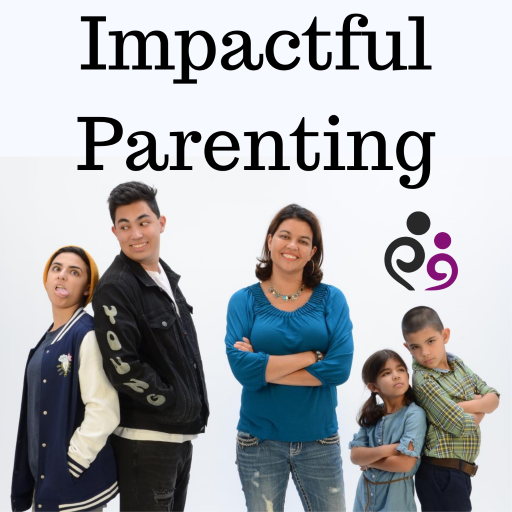
Hi! I am Kristina Campos. I am the founder of the Impactful Parent and my passion is creating better relationships between parents and their children. I am a parenting coach, a teacher who has taught every grade level from Pre-K through high school, and most importantly, I am a mom of 4 kids! (Yep, those are my kiddos in the podcast photo).
The teen years don’t need to be difficult. Teenagers CAN have a special bond with their parents! Listen and discover the tools and techniques you need to create connections, build trust, and have a stress-free household. This is only the beginning! Let’s get started, together!
-Kristina Campos
Founder of The Impactful Parent
Episodes
May 11, 2022
May 11, 2022
25 min
How To Discipline With Connection
Kristina Campos, founder of the Impactful Parent, teaches the 6 step process for disciplining your child with connection. Look at discipline a NEW WAY and discover how discipline doesn't have to be about taking your child's stuff away all the time, corporal punishment, or the use of fear based tactics. Discipline CAN bring you closer to your child and improve your relationship!
Several FREE RESOURCES included in this video with the links provided.
LINKS MENTIONED IN THE RECORDING
https://theimpactfulparent.com/app Download the FREE Impactful Parent App! Available on Apple and Android App Stores. FREEBIES from episodes included!
Apple Store: https://theimpactfulparent.com/ios
Android Play Store: https://theimpactfulparent.com/android
https://theimpactfulparent.com for more FREE Resources and paid programs.
https://theimpactfulparent.com/learningquestions for your free resource
---------
Rate, Review, & Subscribe!
"I love Kristina and all the FREE tips that she has to offer! Thank you for making my parenting journey better!" <– If that sounds like you, please consider rating and reviewing my show! This helps me support more people — just like you!!!
Rate with five stars, and select "Write a Review." Then be sure to let me know what you loved most about the episode!
Also, if you haven't done so already, subscribe to the podcast. I'm adding a bunch of bonus episodes to the feed and, if you're not subscribed, there's a good chance you'll miss out. Subscribe now!
What to do next:
- Get The Impactful Parent App! Everything you need in your parenting journey in one spot! Available on the Android Play Store and the Apple Store. Search Impactful Parent (direct links listed above under Links in Episode).
- Follow The Impactful Parenton social media if you don’t already! Facebook, Instagram, LinkedIn, & Pinterest
- Subscribe to the PODCAST
- Check out the official website of The Impactful Parent for FREE RESOURCES, parenting classes, mom’s groups, and so much more! Click here to check it out!
- Discover how you can work with Kristina! Sign up for a FREE 30-minute discovery call! Click here to find a time that works best for you!
Bottom Line... I am here for YOU! Contact me at theimpactfulparent@gmail.com
------
Transcript of How To Discipline With Connection
You might be screaming and yelling at your kid. Maybe you've tried taking everything away, their phone, their freedom, maybe you have even tried taking off their bedroom door. Or perhaps you've tried the opposite approach. Have you tried gifting your child with everything you never got growing up so that your child will be happy and listen to you? Maybe you have tried both techniques, and nothing works. You've just ended up with an ungrateful child who won't listen and talks back.
Yikes. That's frustrating. You're probably wondering, "What's wrong with my child?" Or you could be asking, "How can I fix this? What am I doing wrong?"
Hello, my name is Kristina Campos. I am the founder of the Impactful Parent. Every week I give you parenting videos that can help you in your parenting journey. If you have a particular topic or parenting question about your school-aged child that you would like me to address, please submit it at theimpactfulparent@gmail.com or by messaging me on social media. All submissions are kept anonymous.
Today, I will talk to you about positive discipline. How you can discipline your child in a way that is effective and still doesn't ruin the parent-child relationship like hitting, taking everything away, or yelling at your child can do. I will be giving you the six step process you need to see a change in your discipline and stick around to the end because I will also be giving you some free resources to check out that will also help you in this process. Let's get started!
Step 1: Get your mindset right.
Many people grew up with our parents spanking us and taking a super authoritarian stance on parenting. We were told, "Do this because I said so," and "Don't do that or else…" If this is how you grew up, it's no wonder that you might be lost as to why your discipline isn't working. People will naturally do things they know and feels familiar. The problem is things are not like how you grew up anymore. Culture and society have changed. But before you dive into a new way of disciplining, it's important to give yourself grace for trying those old ways. This isn't your fault. Your child never came with a manual. These pre-conceived thoughts make up your foundation on what you believe discipline should look like. So, ask yourself:
- How did I grow up? What was I taught?
- Was I taught punishment is the most effective discipline technique?
- Do I believe children should be seen and not heard?
- Was I allowed to express emotion when I grew up, or did I have to stuff my emotions deep inside?
- Did I see my childhood discipline as too soft, firm, loose, or rigid?
Today, I am giving you permission to analyze those old beliefs and throw them away. They aren't working for you anyway. You don't need to hold on to them anymore.
I want you to consider the new belief that discipline is not about punishment. Discipline is about guiding, teaching, training, modeling, and correcting behaviors. The point of discipline is to teach our kids how to make better choices and improve their moral character. Punishment is about making your child's life so miserable or painful that they want to comply. Instead, let's learn how to discipline in a way that brings your child closer to you, improves your relationship, and doesn't make your child fear you, but rather confide in you for help.
Step 2: Create a connection as soon as possible.
There is a saying in the parenting world: You must connect before you correct. This concept might be completely different from your own upbringing. Still, extensive research from doctors shows parents cannot positively influence their children until they have created a bond. This means creating a relationship with your child where they don't fear you but rather trust you. Sometimes, parents must stop dealing with the misbehavior and first heal, stabilize, and grow the relationship. Connection creates a sense of safety and openness with your child.
You must create trust in good times if you want your child to come to you during difficult times. As you know, trust doesn't just happen overnight. This is going to take some time and consistency on your part. Here are my suggestions for creating your connection as soon as possible.
- Explain to your child that you don't want to yell at them anymore or spank them. Tell them you want to change, and you want to love them.
- Schedule 15 minutes of one-on-one time with your child every week. If you can do more than 15 minutes- GREAT, but 15 minutes is a good place to start because one on one time might mean you have to get a babysitter for your other children. One-on-one time is not watching TV together. Also, put your one-on-one time on your calendar. If you don't do this, I find that parents get busy, and although they have great intentions- they won't do it.
- Talk with your child about the house rules. Ask them what kind of NEW rules we want in our house that will make you feel safe and think you can follow. Let your child verbalize what is important to them. Then, once you've talked about the rules, write the rules down on a piece of paper and discuss with your child what the consequences of breaking the rules should be. Again, let them have a say in their punishment. If your child is being too harsh or lenient with their punishments, then talk about that and come to a compromise. You still have the power here. I am NOT telling you to let the kids make the rules and the consequences. I AM telling you that the kids should have a say in this, and this is a conversation you should have with your child together.
- To create a connection in discipline, you want to keep the energy of the discipline POSITIVE. When your child breaks the rules, remind them of the rule they broke and implement the consequence you agreed upon quickly and without argument. If your child tries to engage you, walk away from all yelling and negotiations. Matter-of-factly implement consequences without the drama. Matching their yelling and big emotions does nothing except keep you in the cycle of chaos.
- After the dust has settled, go back to your child, and check in with their feelings. Allow them to vent without you talking at all. Just listen to their perspective and feelings and let them talk. After that, refer to the Helping Kids to Learn From Their Mistakes free resource that I will mention at the end of this episode. This free resource will help you NOT fix your child's problems but help you guide them to learn from their mistakes.
- There are 5 things to keep in mind to connect with your child. They are LISTENING, SAFE TOUCH (like hugs, holding hands, pats on the back, etc.), POSITIVE WORDS (focusing on what your child does right instead of what they are doing wrong), EYE CONTACT (being engaged when you are with them and not giving your child half-ass attention like working or being on your phone while with your child) and SPEAKING TO YOUR CHILD'S LOVE LANGUAGE. (For more about the 5 Love Languages by Gary Chapman, go to https://www.5lovelanguages.com/ )
Lastly, keep in mind that how you connect with your child should change as your child grows because they change too. A common mistake that parents make is trying to connect with their child the same way they did 3 years ago. Connection is easy: DO whatever your child wants, not what you want to do. This means you'll have to ask them!
Step 3: Learn different ways to discipline.
Remember that our goal of discipline is to teach a lesson. The goal of consequences is not to hurt your child but to create paths to solutions. Discipline can have many forms.
- Training: Teaching your kids how to do something by having THEM DO IT. This is a learning by doing method. Many parents stray away from training their kids because it takes time and effort by the parent. You must SHOW your child how to do what you want them to do. Then you must let them do it alone, go back and correct them, monitor their progress, and finally keep a consistent expectation that they have the skills to do the task now. Also, once parents have trained their child to do something, they must TRUST their child to do it (even if they know they will mess up sometimes.) This method takes patients, monitoring, effort, and a willingness to allow your child to learn from their failures. Think about how you can use the training method to teach your child a skill that you need them to learn, like how to clean their room or cook for themselves.
- Modeling: Teaching kids how to do something by role modeling what you want. You can shape and influence your child by walking the walk and talking the talk yourself. Couple role modeling with creating rituals and routines, and now you got a powerful influence. How can you teach your child a new skill through modeling? For example, if you want your child to be faithful, then model the ritual of going to church and praying in front of them. Or maybe you don't want phones at the dinner table anymore. You will also have to model what that behavior looks like and follow the rules you want to implement.
- Correcting: The last thing you want to do is do the task for your child because it's easier or faster. If you do the task for them, the only thing you are teaching your child is that if they ignore the issue long enough, you'll do the task for them. Correcting your child's behaviors is best done by role modeling what you want to see, training your child on how to do the task, revisiting what happened that went wrong, and talking about how they could do better next time. The objective of correction is to adjust behaviors for a positive outcome. You can use the free resource documents I will give you at the end of this episode called Learning From Mistakes to help you do this.
- Lastly, there are 4 foundations to discipline. Just 4, but you should know what they are so that you can take those 4 core techniques and apply them to your disciplining repertoire. To learn what the 4 foundations of discipline are, watch my short video at https://theimpactfulparent.com/discipline
Step: 4 Teach vocabulary for feeling words
A lot of the time, kids and even teenagers act inappropriately because they don't know how to express themselves any other way. They don't have the vocabulary to tell anyone how they feel, so they will show you. Yes, teenagers do this all the time! The more vocabulary you can teach your child to express their feelings, the less that will happen. I like to do this activity in the car and make it a game. Also, don't label feelings as good or bad. You feel the way you do, and that's it. Period. You can't help it. Accept all feelings in your household. By accepting all feelings in your home, you are not saying that you accept all behaviors. That is an important distinguisher. Be aware of what you were allowed to feel growing up. If you weren't allowed to be sad or cry growing up, then be aware you might also be telling your children the same thing.
Step: 5 Be a behavior detective
Every behavior has a reason. Behaviors are a child's way of telling their parents how they feel, especially if they don't have the words to say it aloud. This means that parents need to be detectives of the meaning behind the behaviors. When your child is acting crazy, and you're looking at them with the face of Tom (from Tom and Jerry), his jaw-dropping down to the floor, ask yourself, "What is their goal by doing _______?"
- Do they need attention? Do they need acknowledgment for some reason?
- Do they need some sense of power? Do they feel like they don't have any choices or control over what is happening? Do you, as a parent, feel challenged? This is also another indicator that your child might need some more power.
- Do they want revenge? Do they have a need to protect themselves? Are they scared? Are they feeling unsafe? Kids that bully, boss people around, or hide might be trying to protect themselves by these behaviors.
- Does your child feel discouraged or like they are going to fail? They may be sabotaging, avoiding, procrastinating, or hiding if they are. These behaviors show signs of being scared to fail or not living up to expectations.
I can go on and on, but the point is that parents need to find the meaning behind their children's behaviors. If too many crazy behaviors are happening all at once, just pick one and focus on the meaning behind that behavior first. Take it one behavior at a time. Behaviors have a purpose. Your child is likely using these behaviors to cope with the feeling they don't like. Remember that behaviors are how my child is asking for help. How can you help them?
Lastly, before I move on to step 6, remember that if your child has been acting like this for a while, they feel comfortable with those behaviors and have become habits. Habits are hard to break. Self-negative talk, fears and thought patterns can become habits. Plus, it is uncomfortable when you change a habit, making people uneasy. Be patient with your child as you retrain their behaviors and thought patterns.
Step 6 SHOW your child HOW to act better.
One of the biggest mistakes I see parents make is telling a child, "No. You can't do that," but ending the conversation there. The child is left knowing what they can't do, but they still have no idea what they CAN do. For example, a parent might ask the child to clean his room, and a half-hour later, the parent goes upstairs to check on the child and their progress. As the parent steps into the child's bedroom, the room appears clean but low-and-behold; the parent also finds all the child's clothes stuffed inside the dresser drawers, wrinkled, and even a few snack bars hiding among the jeans. The parent gets mad at the child and says, this is not cleaning up your room. Don't stuff your clothes in the dressers! Fix it! And the parent storms out of the room, angry. The child now knows that stuffing the clothes in the dressers is not 'cleaning the room,' but is left with the question, what is? From the child's perspective, their room looks great. There is nothing on the floor, and the room looks clean. The child is left to guess what the parent wants now and might even be afraid because they thought they did a good job, but instead, they just got yelled at and have no idea how to fix it. On the other hand, the parent assumed that the child knew what to do and was lazy. There is a huge disconnect here.
Parents can not assume that the child knows anything! Instead, they need to clarify their expectations by SHOWING the child what they want. Even verbally telling the child what you want is not proficient. A lot can be misinterpreted by just telling the child what you need. Instead, you have to show them. In the case of our example, the parent needs to show the child how to fold their clothes and how to neatly put their clothes in the dresser. If your child is lazy, they will stop you from explaining yourself and will tell you that they know. They won't sit there and listen to your lecture, so start explaining yourself in painfully boring ways until your child gets it. They will tell you when you can stop. Trust me. Children don't know what they don't know. Just because your child is smart doesn't mean they can read your mind and know your expectations. Show them your YES, after you have told them your No.
Those are the 6 steps for better discipline. Now it's time to level up your parenting game and put those 6 steps into action. I have several free resources for you today that you need to check out.
- Making Rules Kids Will Follow video
- The 4 Pillars of Discipline video
- What Every Child Needs video
- The Free PDF- Helping Kids Learn From Mistakes
The free pdf, you can find at https://theimpactfulparent.com/learningquestions
I have also made things easy for you and put all the free video resources for you in one place. They are inside the Impactful Parent app. Don't worry! The app is free, too, and you can download it from the Apple Store, the Android play store, or by going to https://theimpactfulparent.com/app. You'll find all your videos inside the app in one place- under my Core content section. It's that easy! Everything you need at your fingertips and inside your pocket whenever you have a moment or need some extra help. The Impactful Parent app is full of episodes like this one that will help you in your parenting journey. You got nothing to lose with these free parenting resources. Go to theimpactfulparent.com and discover how you can step up your parenting game and be a more impactful parent with the Impactful Parent app. Download it right now.
But until next time, you got this, parents. I am just here to help.
May 5, 2022
May 5, 2022
19 min
Essential Oils For Healthier Children
Special guest, Cindy Vallone, gives tips for
- HOW to use essential oils
- WHAT kind of essential oils you want to use for STRESS, SLEEP, MOOD, ENERGY, FOCUS, and SELF-CARE.
- Tips for what to look for when buying essential oils and so much more!
Listen and learn as Cindy helps parents understand the benefits of essential oils for healthier children!
-------
LINKS MENTIONED IN THE RECORDING
https://theimpactfulparent.com/app Download the FREE Impactful Parent App! Available on Apple and Android App Stores. FREEBIES from episodes included!
Apple Store: https://theimpactfulparent.com/ios
Android Play Store: https://theimpactfulparent.com/android
https://theimpactfulparent.com for more FREE Resources and paid programs.
www.cindyvallone.com for more Essential Oils For Healthier Children from Cindy.
------
Rate, Review, & Subscribe!
"I love Kristina and all the FREE tips that she has to offer! Thank you for making my parenting journey better!" <– If that sounds like you, please consider rating and reviewing my show! This helps me support more people — just like you!!!
Rate with five stars, and select "Write a Review." Then be sure to let me know what you loved most about the episode!
Also, if you haven't done so already, subscribe to the podcast. I'm adding a bunch of bonus episodes to the feed and, if you're not subscribed, there's a good chance you'll miss out. Subscribe now!
What to do next:
- Get The Impactful Parent App! Everything you need in your parenting journey in one spot! Available on the Android Play Store and the Apple Store. Search Impactful Parent (direct links listed above under Links in Episode).
- Follow The Impactful Parenton social media if you don’t already! Facebook, Instagram, LinkedIn, & Pinterest
- Subscribe to the PODCAST
- Check out the official website of The Impactful Parent for FREE RESOURCES, parenting classes, mom’s groups, and so much more! Click here to check it out!
- Discover how you can work with Kristina! Sign up for a FREE 30-minute discovery call! Click here to find a time that works best for you!
Bottom Line... I am here for YOU! Contact me at theimpactfulparent@gmail.com
-----
Summary of the interview:
Cindy Vallone is a busy wife, mom of two teenage boys, and an entrepreneur. She and her family have been using essential oils for over six years and have made over their medicine cabinet. Today, they use essential oils as their first line of defense for “head to toe” wellness. Cindy advocates for essential oil use in families, whether for physical, emotional, or mental wellness. Cindy buys and sells her essential oils from the company DeTerra, where she is a representative. Cindy can also help you purchase the best products for your family.
Video clock summary:
An introduction to essential oils and the show
What are essential oils? How are they made? Cindy explained that essential oils are derived from plants and nature.
How did Cindy get into essential oils? Turns out that Cindy started out as a skeptic. She did not believe that essential oils would work to improve her headaches until a friend of hers encouraged her to try essential oils for her migraines.
How long does it take to see the effects of essential oils? Cindy explains that some essential oils have immediate effects and results depending on what you use the essential oils for.
What to look for in purchasing essential oils. Many grocery stores and other realtors do NOT sell pure essential oil blends. It is important to look out for harmful additives. DeTerra’s essential oils are all 100% pure, and that is why Cindy trusts this particular brand for herself and her family.
How can I use essential oils? Cindy explains 3 ways to use essential oils: topically, aromatic, and ingestion.
What essential oils can I use for sleep? Cindy gives options
What essential oils can I use for stress? Cindy gives options
Safety tips with essential oils.
What essential oils can I use for mood? Cindy gives options
How to use essential oils with infants.
What essential oils can I use for self-care? Cindy gives options
What essential oils can I use for energy and focus? Cindy gives options
Cindy’s contact information and how you can become a more impactful parent.
Apr 28, 2022
Apr 28, 2022
16 min
When One Parent Undermines The Other
Kristina Campos, the founder of The Impactful Parent, talks to parents about:
-What undermining looks like in parenting
-What undermining does to the parenting relationship
-Tips for combatting the problem
LINKS MENTIONED IN THE RECORDING
https://theimpactfulparent.com/app Download the FREE Impactful Parent App! Available on Apple and Android App Stores. FREEBIES from episodes included!
Apple Store: https://theimpactfulparent.com/ios
Android Play Store: https://theimpactfulparent.com/android
https://theimpactfulparent.com for more FREE Resources and paid programs.
Rate, Review, & Subscribe!
"I love Kristina and all the FREE tips that she has to offer! Thank you for making my parenting journey better!" <– If that sounds like you, please consider rating and reviewing my show! This helps me support more people — just like you!!!
Rate with five stars, and select "Write a Review." Then be sure to let me know what you loved most about the episode!
Also, if you haven't done so already, subscribe to the podcast. I'm adding a bunch of bonus episodes to the feed and, if you're not subscribed, there's a good chance you'll miss out. Subscribe now!
What to do next:
- Get The Impactful Parent App! Everything you need in your parenting journey in one spot! Available on the Android Play Store and the Apple Store. Search Impactful Parent (direct links listed above under Links in Episode).
- Follow The Impactful Parenton social media if you don’t already! Facebook, Instagram, LinkedIn, & Pinterest
- Subscribe to the PODCAST
- Check out the official website of The Impactful Parent for FREE RESOURCES, parenting classes, mom’s groups, and so much more! Click here to check it out!
- Discover how you can work with Kristina! Sign up for a FREE 30-minute discovery call! Click here to find a time that works best for you!
Bottom Line... I am here for YOU! Contact me at theimpactfulparent@gmail.com
Transcript for When One Parent Undermines The Other
This has got to be one of the most frustrating things as a parent.
You make rules for your kids to protect them. You give them boundaries to help guide them to make good choices. THEN suddenly, in the middle of making or reinforcing your rules, your co-parent steps in and completely undermines everything you just told your child. AHHHHH! Of course, this makes you want to scream! That person made your rules look like a suggestion and not something your child needs to follow. To make matters worse, you know it will happen again. What are you going to do about it?
Hello, my name is Kristina Campos. I am the founder of the Impactful Parent. Every week I give you parenting videos that can help you in your parenting journey. If you have a particular topic or parenting question about your school-aged child that you would like me to address, please submit it at theimpactfulparent@gmail.com or by messaging me on social media. All submissions are kept anonymous.
Today, I will talk to you about what to do when a co-parent undermines your authority. I will explain what undermining looks like, what it does to your parenting relationship, and stick around to the end because I will also be giving you tips for dealing with these frustrating situations. Let's get started!
When other adults undermine a parent's authority, it can be hugely detrimental to the parent-child relationship. It doesn't matter who the undermining adult might be. It could be a co-parent, an ex, a grandparent, a coach, a teacher, or even YOU. Sometimes people can subconsciously undermine another adult because they feel resentful, jealous, or simply don't like how the other co-parent does things.
Let's start with what undermining looks like to get on the same page about our topic. The following are ways that adults can undermine each other in their co-parenting.
- Saying, "It's no big deal," when the adult is trying to correct the child's behaviors
- When one parent is always the disciplinarian, the other parent gets to be "Fun Dad/Mom."
- When an adult lies for the child or covers up the child's lie to the other parent.
- When an adult tells the child, "Don't tell Dad/Mom about this."
- Complaining about the other parent in front of the child.
- Disagreeing about discipline or rules in front of the child.
- When one adult changes the rules or reduces the punishment set by the other parent
- If an adult refuses to uphold the rules or the disciplinary actions that the parent has established simply because the parent is around.
- When one parent says yes when the other parent says no.
- When an adult tries to get the child on their side of a disagreement or the child to favor them instead of the other parent.
Now that we have established what undermining might look like, you might be thinking that undermining is a horrible way to interact with the child. Why would someone do this? Well, sometimes undermining is not intentional. Parents that get less time with their children due to work or divorce tend to want their time with their children to be happy and enjoyable. They don't want their time with their kids to be spent arguing or disciplining. They want their children to like them and not feel disappointed when it's time to spend time with the non-custodial parent. Being a rule enforcer isn't easy, so what happens in these situations is unintentional undermining. But the bottom line is: All undermining is detrimental to the child. The intent doesn't matter.
What undermining Does: Studies show that children who grow up in an environment where one parent constantly undermines the other parent will learn to be manipulative. These kids learn that manipulation is acceptable and helps them get what they want. Undermining is also confusing to children. It teaches kids that rules might be flexible, and no doesn't always mean no. This causes kids to also think that consequences are optional. Children won't take their punishments seriously; therefore, they will often break the rules. There is a clear connection between undermining and kids lacking respect for authority. Even worse, the parent-child relationship loses respect also. Sometimes the child will feel like the parent who enforces the rules is just being mean, and now the child doesn't want to be around the parent that seems to have rules for no reason. However, when parents work together to create common rules, punishments, consequences, and boundaries- (whether the parents live together or not,) these parents also create an environment for their child that is predictable, reliable, and produces less anxiety for the child because kids know what is expected of them and what the parent will do, no matter which parent catches them.
One of the worst things parents can do is undermine the other in front of the child. For example, if one parent tells the child that they can't be on their phone because they need to get homework done, the other parent comes into the room and says, "It's ok. You can do homework later tonight. Right now, will you call your grandma? She wanted you to call her." Even though they don't seem intentionally malicious, statements like this teach the child that the other parent doesn't need to be listened to.
What can parents do? The first part of your solution is to avoid power struggles. This comes in two parts: Avoiding power struggles with the underminer and avoiding power struggles with your child.
You can't control what happens outside of your home. Suppose you are in a power struggle, undermining, situation with a divorced co-parent. In that case, you will have to accept that you can't control what happens in their home. Period. Attempting to control what happens in the other household will only lead to more arguments. You can't win that battle. You can, however, take control of your own home and your own domain. Keep your rules and consequences to those rules well known and consistent. Consistency and communication with your child will be your most important goals. Beyond enforcing your own house rules with extreme predictability, you can also work on avoiding the power struggles with your ex by sitting down with your co-parent and making consistent rules and consequences across both houses. Yes, I understand that this is much more easily said than done. I suggest finding a co-parenting mediator who can help you communicate with your co-parent. If you are still married, a couple's therapist can also help. Either way, find a time to talk with your co-parent where the two of you can be ALONE and not discuss the rules and consequences in front of the child. The goal here is to find a compromise until you can reach an agreed-upon way to do things. With your mediator, talk about:
- Your ideal parenting styles and values
- Common house rules you can implement together
- Discipline and consequences for rule violations
But what if the other parent doesn't want to cooperate or compromise? Then you will have to take the high road and be the best parent you can be despite the damage the other adult is doing. Taking the high road is also not an easy path, especially when you are being bad-mouthed and undermined by another, but don't sink down to their level of disrespect. You need to focus on being the role model parent that puts their child's best interest as the first priority. Don't talk badly about the other parent. As your child grows, they will begin to see the truth. They will be able to come to their own conclusions. When that day arrives, your child must remember YOU as the parent who provided predictability in the home, rules that provided security and safety, trust that you aren't a person who talks badly about others when they aren't present, and consistency in their home life.
This brings me to avoiding power struggles with your child also. Engaging in power struggles with your child sends them the message that your rules are up for debate. If your child starts to argue with you, it doesn't mean you have to argue back. You can resist the temptation to yell and defend yourself. Simply redefine your boundaries and walk away. Enforce consistency. Also, consider using consequences instead of punishments. Too often, parents resort to removing everything from their children to make them learn their lesson or comply with the rules. Although removing privileges can be an effective way to discipline, it is not the only way. You can't punish someone for better behavior. Remember that the goal of discipline is not to punish but rather to teach. If you want some new ideas on setting up different kinds of disciplinary consequences, watch my video called Discipline Techniques That Work https://youtu.be/KzwbTciGgsY and my video on Balancing Discipline and Love https://youtu.be/qV4StXdh_gU.
Lastly, remember that change doesn't happen overnight and is best implemented in small steps. This can feel frustrating because we want things to change today, but baby steps are still progressing. In fact, baby steps open the opportunity for more change faster because you will be getting less resistance from your child and the underminer than you would if you tried to change everything all at once. Focus on ONE behavior at a time to be the most effective. Make a written list of the things you want to see improved, and then number them in your order of importance. Concentrate your energies on improving one item on your list at a time. Talk to your underminer and your child about:
- Your new goal,
- what the change in your home is going to look like moving forward,
- the consequences of the new rule,
- and the privileges your child will get for compliance.
Allow your child to earn privileges day by day. Match a reward and a punishment with each rule you make. Hopefully, your co-parent can enforce the same rules and consequences. Still, even if they won't- you need to stay strong in your convictions and consistent implementation.
I hope this episode helped you today. For more information on how to navigate relationships, check out couple's therapist Esther Perel's YouTube channel for more amazing videos. https://www.youtube.com/user/perelesther
If you have a topic or a parenting question about your school-aged child, please ask! Submit your questions by social media DM or email me at theimpactfulparent@gmail.com. Plus, if you want to become a more Impactful Parent, download The Impactful Parent App. The Impactful Parent app is FREE and full of episodes like this one that will help you in your parenting journey. Investing in your family looks like learning the warning signs of certain behaviors so you can stop bad things before they start, discovering new parenting techniques to make your parenting more effective, and joining a community of like-minded parents that also want to be the best parent they can for their child. All of this, plus so much more can be found inside The Impactful Parent app so download it today. You got nothing to lose with this free parenting resource. Go to theimpactfulparent.com and discover how you can step up your parenting game and be an more impactful parent.
But until next time, you got this, parents. I am just here to help.
Apr 21, 2022
Apr 21, 2022
15 min
Strategies For A Better Relationship With Your Partner
Cheri Timko, a relationship coach, comes onto the Impactful Parent stage to teach parents 3 relationship habits that every couple needs to implement to have a good, long-lasting partnership.
LINKS MENTIONED IN THE RECORDING
https://theimpactfulparent.com/app Download the FREE Impactful Parent App! Available on Apple and Android App Stores. FREEBIES from episodes included!
Apple Store: https://theimpactfulparent.com/ios
Android Play Store: https://theimpactfulparent.com/android
https://theimpactfulparent.com for more FREE Resources and paid programs.
www.cheritimko.com for more from Cheri
------
Rate, Review, & Subscribe!
"I love Kristina and all the FREE tips that she has to offer! Thank you for making my parenting journey better!" <– If that sounds like you, please consider rating and reviewing my show! This helps me support more people — just like you!!!
Rate with five stars, and select "Write a Review." Then be sure to let me know what you loved most about the episode!
Also, if you haven't done so already, subscribe to the podcast. I'm adding a bunch of bonus episodes to the feed and, if you're not subscribed, there's a good chance you'll miss out. Subscribe now!
What to do next:
- Get The Impactful Parent App! Everything you need in your parenting journey in one spot! Available on the Android Play Store and the Apple Store. Search Impactful Parent (direct links listed above under Links in Episode).
- Follow The Impactful Parenton social media if you don’t already! Facebook, Instagram, LinkedIn, & Pinterest
- Subscribe to the PODCAST
- Check out the official website of The Impactful Parent for FREE RESOURCES, parenting classes, mom’s groups, and so much more! Click here to check it out!
- Discover how you can work with Kristina! Sign up for a FREE 30-minute discovery call! Click here to find a time that works best for you!
Bottom Line... I am here for YOU! Contact me at theimpactfulparent@gmail.com
------
Summary of the interview: Strategies For A Better Relationship With Your Partner
Three Things You Need for A Good Relationship
Relationships are difficult. The push, the pull, and the compromise. Most relationships have turbulent times, and the ones that last ride the rollercoaster of emotions that teach us the meaning of “death due us part,” especially when there are many days we want to kill our partner.
Today, Cheri Timko, a relationship coach, comes onto the Impactful Parent stage to teach parents 3 relationship habits that every couple needs to implement to have a good, long-lasting partnership.
Cheri Timko Bio: Cheri Timko helps women deepen their connection with their current partners to have the relationship they long for. She has been happily married for 20 years. She is a veteran psychotherapist and homeschool mom of three teenage daughters.
Interview summary: Cheri Timko speaks about the 3 relationship habits that strengthen partnerships.
- Having good relationship habits
- The ability to work through problems
- Ways to clean up messes
Having Good Relationship Habits: According to Cheri, relationship habits are the tiny interactions and things you can do for your partner every day. Things like:
- Say good morning and make them a cup of coffee
- Words of affirmation
- Small acts of kindness
A Way To Work Through Problems: Finding ways to come to an agreement. Learning how to solve conflict and make compromises. Cheri recommends couples develop at least 10 solutions to the problem to brainstorm and facilitate compromise.
Ways To Make Repairs: This is a system to “make it up” to our partner when we were wrong. The most common form of repair is an apology. Cheri warns that an apology can be a good way to repair a situation, but only when the apology is authentic and constructed correctly. Cheri then discusses some of the essential qualities of a good apology. Cheri also talks about how to make repairs when a person doesn’t want to apologize or feels like they should apologize.
Finally, Cheri talks about having a great relationship with your partner!
To get the FREE RESOURCES that are included in this episode, go to the links below:
- Freebie #1: Strengthen Your Relationship PDF: A walkthrough on how to use these relationship habits in practice, found inside the Impactful Parent App https://theimpactfulparent.com/app
- 101 Ways To Add Joy To Your Life found at cheritimko.com
Apr 14, 2022
Apr 14, 2022
12 min
The Truth About Self Harm
Kristina Campos, the founder of The Impactful Parent, talks to parents about the warning signs of self-harm, what parents should look for, myth busters about cutters, what parents can do to support their child, and warning signs that the situation is getting worse.
LINKS MENTIONED IN THE RECORDING
https://theimpactfulparent.com/app Download the FREE Impactful Parent App! Available on Apple and Android App Stores. FREEBIES from episodes included!
Apple Store: https://theimpactfulparent.com/ios
Android Play Store: https://theimpactfulparent.com/android
https://theimpactfulparent.com for more FREE Resources and paid programs.
-----
Rate, Review, & Subscribe!
"I love Kristina and all the FREE tips that she has to offer! Thank you for making my parenting journey better!" <– If that sounds like you, please consider rating and reviewing my show! This helps me support more people — just like you!!!
Rate with five stars, and select "Write a Review." Then be sure to let me know what you loved most about the episode!
Also, if you haven't done so already, subscribe to the podcast. I'm adding a bunch of bonus episodes to the feed and, if you're not subscribed, there's a good chance you'll miss out. Subscribe now!
What to do next:
- Get The Impactful Parent App! Everything you need in your parenting journey in one spot! Available on the Android Play Store and the Apple Store. Search Impactful Parent (direct links listed above under Links in Episode).
- Follow The Impactful Parenton social media if you don’t already! Facebook, Instagram, LinkedIn, & Pinterest
- Subscribe to the PODCAST
- Check out the official website of The Impactful Parent for FREE RESOURCES, parenting classes, mom’s groups, and so much more! Click here to check it out!
- Discover how you can work with Kristina! Sign up for a FREE 30-minute discovery call! Click here to find a time that works best for you!
Bottom Line... I am here for YOU! Contact me at theimpactfulparent@gmail.com
-------
Transcript of: The Truth About Self Harm
"Why are you doing this? Hurting yourself if not the solution."
That was my first reaction when I was a young teacher teaching high school, and I found blade marks on the legs of one of my students when their shorts rode up a little too high on that unusually hot day. My student was quick to pull their shorts down to cover the marks I had seen. Her face turned red with embarrassment, and then she angrily spoke back, "It's not your business," while she stood up and walked out of the classroom.
I didn't handle that well. I was inexperienced and reacted to what I saw instead of taking the time to think about how best to approach and help my student. I've learned a lot since then. I've also seen undeniable patterns of self-harm over the years. First, self-harm habits are increasing in our young people. Second, I don't know why but teenagers' most difficult months of stress, anxiety, and despair seem to be October and April.
Hello, my name is Kristina Campos. I am the founder of the Impactful Parent. Every week I give you new parenting videos that can help you in your parenting journey. If you have a particular topic or parenting question about your school-aged child that you would like me to address, please submit it at theimpactfulparent@gmail.com or by messaging me on social media. All submissions are kept anonymous.
Today I am going to talk to you about self-harm and cutting. Why do kids do it? What to look for in your child? How can parents help their children? And stick around to the end because I will also be giving you the warning signs that the situation is getting worse. We got a lot to cover, so let's get started!
Self-harm is when a person hurts themselves to deal with difficult feelings, painful memories, overwhelm, and/or trauma. The most common forms of self-harm are cutting, burning, carving words or symbols into the skin, self-hitting, self-punching, head banging, scratching, piercing the skin with sharp objects, headbanging, and inserting objects under the skin. The most popular form of self-harm for girls is cutting. This might look like a child taking a razor blade or other sharp object and passing the blade across the skin, hard enough to penetrate a cut, creating lines, words, symbols, or even too many reports of accidental injury. For boys, their most popular form of self-harm is punching or hitting themselves. In fact, the average age of a child's first indecent self-harm is around 13 years old. I want parents to know that self-harm can also start earlier than that. Age 13 is only an average. This isn't just a problem with teenagers. Parents need to be aware of their child's body without being too invasive on the child. Most self-harm will leave a mark, and most marks are left on the arms, legs, and the front torso. So if you find your child wearing long sleeves on a particularly warm day, long pants at the beach, or a sudden refusal to go to the pool (aka-get into a swimsuit), pause and notice. Those behaviors are warning signs of self-harm. Parents want to look for fresh cuts, scratches, bruises, bite marks, picking at the skin, rug burns (which come from the excessive rubbing of an area to create a burn), and even watch out for your child reporting injury too often, perhaps claiming they are clumsy.
Now I'd like to debunk a few common misconceptions about self-harm that many parents don't understand.
Myth 1: If the child is self-harming, they want to kill themselves.
Self-harm does NOT have to be an attempt to kill oneself. In fact, most of the time, it is not. Self-harm is a coping mechanism. It is a way to deal with big emotions. Most suicide attempts are well thought out and planned; however, most self-harm is impulsive.
What does this mean for parents? Your child is suffering emotionally. They are not in a good place mentally and need help. Whatever they are dealing with has them hurting so badly that they look to hurting themselves externally to feel better.
Myth 2: The child is self-harming to seek attention.
Your child might be giving a cry for help when they show their wounds to someone, but most self-harm is hidden. Children hide the evidence of harming themselves because they feel embarrassed and scared to get in trouble. A lot of kids are ashamed of the marks left behind from self-harm.
What does this mean for parents? Your child needs help learning coping skills, not a lecture about how awful it is they are hurting themselves. They already know it's bad. Your child doesn't have good coping tools to help with psychological pain. They can't manage their emotions productively. Your child is having trouble regulating, expressing, and understanding all the big feelings. They likely feel worthless, lonely, mad, rejected, and even guilty. They need help. Taking them to a therapist, they feel comfortable talking to will be an important next step. The therapist might ask a psychiatrist to prescribe anti-depressive medication also, depending on your situation.
Myth 3: This is a phase.
No, this is not a phase. Self-harm needs to be taken seriously, so it doesn't spiral into bigger problems. "A phase" implies that kids just go through this in development, which is normal. Self-harm is not normal. Kids with an increased risk of self-harm might have friends who are doing it. They might be using drug/alcohol, have gone through mental trauma, or have other underlying mental health issues.
What does this mean to parents? Keep vigilant and look out for self-harm. Why people self-harm is unique to every person. It is literally different for everyone. The child is often trying to punish themselves, turn emotional pain into physical pain, and/or stop feeling numb. These children need your help. Watch your child closely, don't judge them for their actions; instead, show your child your concern and love. Get your child to a therapist as soon as possible to start learning more productive coping strategies. Lastly, there are support groups out there for both parents and children. Finding a safe space to vent around people who understand you can be one of the most powerful tools for overcoming this difficult time.
Lastly, what are the warning signs of the situation getting worse? Let's just say it. How do I know the difference between my child self-harming to cope or self-harming to commit suicide?
I know you're scared. Be mindful of your child's space and privacy, but watch them closely. Here are the things you want to look for that things might be getting worse.
- Neglecting their appearance
- Giving away items
- Extreme mood swings
- Talking about wanting to die or kill themselves
- Writing about death
- Withdrawing from everyone. Isolating themselves
- Talking about feeling trapped
- Behaving recklessly
- Show extreme anger and talk about seeking revenge
- Sleeping too little. Sleeping too much.
- Increased use of alcohol and/or drugs
- Talking about being a burden on others
- Looking online for ways to die
- Sudden calmness and making preparations
If these warning signs resonate with your family, please take your child to the local hospital emergency room for evaluation and start the process of seeking help.
If you have a topic or a parenting question about your school-aged child, please ask! Submit your questions by social media DM or email me at theimpactfulparent@gmail.com. Plus, if you want to become a more Impactful Parent, check out all my website offers! I have parenting courses, family coaching, a free downloadable app, and many free resources. But until next time, you got this, parents. I am just here to help.
Apr 7, 2022
Apr 7, 2022
27 min
Turn Phone Photos Into A Legacy
Ken Wimberly tells a personal story of how he overcame his past to focus on being a good father. He talks about how he values documenting his parenting journey and more importantly, the life of his children. With his invention of the Legacy App, Ken developed a way for parents to take their phone photos, journaling, and other memories and store them in one safe place to keep a timeline of documentation for his children. Free resources included in this video can be found inside the Impactful Parent App. Links to the app are found in the comments below.
LINKS MENTIONED IN THE RECORDING
https://theimpactfulparent.com/app Download the FREE Impactful Parent App! Available on Apple and Android App Stores. FREEBIES from episodes included!
Apple Store: https://theimpactfulparent.com/ios
Android Play Store: https://theimpactfulparent.com/android
https://theimpactfulparent.com for more FREE Resources and paid programs.
https://legacyjournal.app/theimpactfulparent For your Legacy App Discount
----
Rate, Review, & Subscribe!
"I love Kristina and all the FREE tips that she has to offer! Thank you for making my parenting journey better!" <– If that sounds like you, please consider rating and reviewing my show! This helps me support more people — just like you!!!
Rate with five stars, and select "Write a Review." Then be sure to let me know what you loved most about the episode!
Also, if you haven't done so already, subscribe to the podcast. I'm adding a bunch of bonus episodes to the feed and, if you're not subscribed, there's a good chance you'll miss out. Subscribe now!
What to do next:
- Get The Impactful Parent App! Everything you need in your parenting journey in one spot! Available on the Android Play Store and the Apple Store. Search Impactful Parent (direct links listed above under Links in Episode).
- Follow The Impactful Parenton social media if you don’t already! Facebook, Instagram, LinkedIn, & Pinterest
- Subscribe to the PODCAST
- Check out the official website of The Impactful Parent for FREE RESOURCES, parenting classes, mom’s groups, and so much more! Click here to check it out!
- Discover how you can work with Kristina! Sign up for a FREE 30-minute discovery call! Click here to find a time that works best for you!
Bottom Line... I am here for YOU! Contact me at theimpactfulparent@gmail.com
Apr 4, 2022
Apr 4, 2022
1hr 15 min
Help! We have a narcissist in the family!
A Clubhouse Replay: Clubhouse is an app available on Android and Apple that is an AUDIO only community. Think podcasting meets Radio... and on it there is lots of opportunities to learn and connect with others.
In this episode, Kristina talks with narcissist survivors. She asks them questions about co-parenting and surviving their narcissistic ways. This is a must-listen episode!
Guest Speakers:
- Sally Pauley Hershey
- Instagram @salley_pauley_hershey
- Clubhouse @shershey7
- Nikki G
- Instagram @nikki_g_speaks
- Clubhouse @nikkispeaks
- Website www.nikkigspeaks.com
- Vanessa Moretto
- Kristina Campos
- Instagram @theimpactfulparent
- Clubhouse @impactfulparent
- Website www.theimpactfulparent.com
-------
Rate, Review, & Subscribe!
"I love Kristina and all the FREE tips that she has to offer! Thank you for making my parenting journey better!" <– If that sounds like you, please consider rating and reviewing my show! This helps me support more people — just like you!!!
Rate with five stars, and select "Write a Review." Then be sure to let me know what you loved most about the episode!
Also, if you haven't done so already, subscribe to the podcast. I'm adding a bunch of bonus episodes to the feed and, if you're not subscribed, there's a good chance you'll miss out. Subscribe now!
What to do next:
- Get The Impactful Parent App! Everything you need in your parenting journey in one spot! Available on the Android Play Store and the Apple Store. Search Impactful Parent (direct links listed above under Links in Episode).
- Follow The Impactful Parenton social media if you don’t already! Facebook, Instagram, LinkedIn, & Pinterest
- Subscribe to the PODCAST
- Check out the official website of The Impactful Parent for FREE RESOURCES, parenting classes, mom’s groups, and so much more! Click here to check it out!
- Discover how you can work with Kristina! Sign up for a FREE 30-minute discovery call! Click here to find a time that works best for you!
Bottom Line... I am here for YOU! Contact me at theimpactfulparent@gmail.com
Apr 4, 2022
Apr 4, 2022
13 min
Helping Kids With Anger Management
Kristina Campos, the founder of The Impactful Parent, talks to parents about helping their children control their big emotions and specifically, how to get kids to control their temper. 2 FREEBIE RESOURCES are included in this video to help parents implement suggested techniques.
LINKS MENTIONED IN THE RECORDING
https://theimpactfulparent.com/app Download the FREE Impactful Parent App! Available on Apple and Android App Stores. FREEBIES from episodes included!
Apple Store: https://theimpactfulparent.com/ios
Android Play Store: https://theimpactfulparent.com/android
https://theimpactfulparent.com for more FREE Resources and paid programs.
--------
Rate, Review, & Subscribe!
"I love Kristina and all the FREE tips that she has to offer! Thank you for making my parenting journey better!" <– If that sounds like you, please consider rating and reviewing my show! This helps me support more people — just like you!!!
Rate with five stars, and select "Write a Review." Then be sure to let me know what you loved most about the episode!
Also, if you haven't done so already, subscribe to the podcast. I'm adding a bunch of bonus episodes to the feed and, if you're not subscribed, there's a good chance you'll miss out. Subscribe now!
What to do next:
- Get The Impactful Parent App! Everything you need in your parenting journey in one spot! Available on the Android Play Store and the Apple Store. Search Impactful Parent (direct links listed above under Links in Episode).
- Follow The Impactful Parenton social media if you don’t already! Facebook, Instagram, LinkedIn, & Pinterest
- Subscribe to the PODCAST
- Check out the official website of The Impactful Parent for FREE RESOURCES, parenting classes, mom’s groups, and so much more! Click here to check it out!
- Discover how you can work with Kristina! Sign up for a FREE 30-minute discovery call! Click here to find a time that works best for you!
Bottom Line... I am here for YOU! Contact me at theimpactfulparent@gmail.com
---------
Transcript: Helping Kids With Anger Management
"What the heck just happened?" I say to myself because I am shocked that my child just took one of my simple requests to start their homework, the same as I do every day when they get home, and my child just blew up at me.
"Why won't you just leave me alone already?!?!" my child yelled at me, along with some other choice words. My kid threw down their backpack and stormed up the stairs stomping without even looking at me. By that reaction, you would have thought that I asked them to clean the bathroom or had just given them a 20-minute lecture. What was going on?
Has this happened to you? Does your child overreact with anger, and you don't know what you did to set them off? Or maybe they get angry daily, and you don't know where the anger is coming from? Or maybe screaming matches have become a regular occurrence in your home?
Well, you're not alone. Many parents ask their kids' seemingly minor requests to be met with a major emotional response or meltdown.
Welcome Impactful Parents. Today, we will talk about children's ANGER and how parents can help their children gain control over their big emotions.
Hello, my name is Kristina Campos. I am the founder of the Impactful Parent. I am the host of the Impactful Parenting podcast and have a free parenting app you can download on Apple or Android devices, also called Impactful Parent.
First, parents need to understand that matching their child's rage and big emotions does little for improving the situation. In fact, it just damages the parent-child relationship. Although it's natural for parents to want to yell back and command compliance when our kids are being disrespectful in their anger, it's not what we should do. Instead, I will encourage you to take a new 5 step process to deescalate the situation and bring understanding into your household.
Step 1: Remain Calm. Take a few deep breaths, count backward from 5 to 1, or do whatever you need to do to NOT yell back. Kids feed off us. They react to our reactions. Yelling back just provokes more yelling. A calm, soothing presence is the most effective way for a parent to help their child regain their composure. This will enable your child to begin dealing with the problem logically, and constructively.
Step 2: Understand That Your Child Needs Your Help. A handful of times, our kids' anger and outburst have nothing to do with us. Still, kids need a place to take out all the sadness, frustration, nervousness, and doubt. Whatever big emotion they might feel, the child subconsciously feels like home is the best place for them to do this. Parents are supposed to be a safe place. Parents are supposed to love their children no matter what, even if they are acting like an animal with rabies. Parents don't deserve to have their child's bad mood explode on them, but try and remember that your child needs your help to process these big emotions, and yelling back at them isn't teaching them anything. Instead, we need to help our children identify where their anger is coming from and how to deal with it.
Anger protects us from being vulnerable. Even when anger appears to be instantaneous, there is always some other feelings or reason that give rise to the anger. Children will avoid dealing with their fears, sadness, or anxiety by stuffing down those emotions instead of projecting anger. Why?
- Anger empowers us with a sense of control. It allows us to feel empowered instead of a victim.
- Anger can be used to seek attention. Anger outbursts can be a cry for help, even subconsciously.
- It is easier to be angry than to feel the other emotions that the anger is suppressing. Anger can be used as a way to soothe other pains.
Step 3: Help Your Child Calm Down So You Can Talk To Them. You can't help your child until they are ready to talk, and sometimes we need to help the child calm down. Learning to cope with big emotions and keep your cool does NOT happen overnight. This is a skill your child needs to develop with practice. Imagine how difficult it is for us, as adults, to keep our composure when someone gets us angry. Children have that same difficulty plus more because they are less practiced at it. Coping isn't intuitive, and as parents, it is important to understand that we probably have to help our children learn to cope.
A mistake that many parents make during this step is assuming what works for them will work for their child. This is not necessarily the case. Kids have to find what works for them on their own, and although your way of coping might work for them, it also may not. Teach your child to cope by giving them lots of options for coping and letting them try each technique out one by one. Let them discover what works for them and what doesn't through practice and the process of elimination.
To help aid in this process, I have a free PDF for you called 20 Ways To Cope. This free resource gives parents over 20 different coping ideas to teach their children. Once several coping techniques that work for your child are identified, I suggest you make a coping box to keep those ideas in one place. When you are done, the box might contain papers with reminders of activities your child can do, different fidget toys, books, journals for your child to write in, coloring books, soft fuzzy blankets, … the idea is to have a box that contains varies options for coping readily for your child to use when they need it. Get the 20 Ways To Cope FREE resource inside the Impactful Parent App alongside this video. https://theimpactfulparent.com/app
Step 4: Identify the REAL source of the stress. Now that you and your child are calmer, you are ready to start figuring out what is really the underlying issue of all that anger. The best way to do this is to ask your child lots of questions. Kids learn best if you don't tell them the answers, but you let them figure out the answers themselves. Let your child discover the root of their feelings, even if you think you know the answers already. Start by saying something like, "I can see you are upset today. Can we talk about what is going on? I would like to help." Then follow up with LOTS of questions about their feelings and the incident that made them angry. Remember, even if you think you know the answers, you want to lead your child to discover those answers themselves. Ask questions like:
- What might be causing that?
- What was your reaction?
- What could you have done better?
- Why do you think that happened?
- How did that make you feel?
- Why do you think they did that?
- Is there any truth in what that person said, or was it false?
- Why does it bother you?
To help you in this process of asking the right questions, I have another FREE PDF for you. These FREE resources give parents questions to ask their children to help them process what happened and learn from their choices. Get it inside the Impactful Parent App alongside this video. https://theimpactfulparent.com/app
Approach your child with empathy and understanding. You want to acknowledge their anger and validate their feelings. You can say something like, "You seem angry today. I bet something crappy happened. I have mad days too." You don't want to solve your child's problems for them. Instead, the intention is to listen and ask questions.
Remember, sometimes children have angry outbursts because they lack the skills to behave any other way. When parents take the time to help their children process and learn from their experiences, they also empower their children to grow and learn.
Step 5: Repeat Don't expect to go through this process once and have your child come out of a Rock Star of Emotional Control. This is going to take practice. Remember, progress is sometimes two steps forward and one step back. Some days your child will want to talk, and other days your child doesn't even want to calm down. You are going to have to stay consistent and patient! Don't give up!
Remember my child stomping up the stairs? Well, I found out that they failed a quiz. Not just any quiz, but one they studied for a lot, and we're hoping to ace and bring their B+ to an A-. To make matters worse, on the walk home, their backpack zipper broke. Papers, notebooks, pencils, and books fell to the ground, were moist and puddly from the afternoon rain. My child felt defeated by the day and was frustrated with his quiz score.
I could have matched my child's behavior with my own anger. It certainly would have been justified because my child's tone and words could be considered disrespectful. I could have yelled at them, given them a punishment, or demanded they start homework immediately. But I didn't. I didn't respond at all. I let them storm to their room. 10 minutes later, I knocked on their door with popcorn in my hand. "Hey, kiddo. It seems like you're angry. Are you ok? I bet something bad happened at school today. What's going on?"
And that was the start of the conversation.
To grab your free resources mentioned in this video today and if you want to become a more Impactful Parent, download the Impactful Parent app! Available for FREE on Apple and Android app stores. Also, check out all that my website has to offer! I have parenting courses, family coaching, and lots of free resources. But until next time, you got this, parents. I am just here to help.
Mar 24, 2022
Mar 24, 2022
16 min
Nerissa Bauer gives tips to parents on how they can help their child with ADHD to be their best selves. Nerissa's tips are practical and useful PLUS- Nerissa gives the audience a FREE E-BOOK! Her free e-book, "Getting the care your child needs with an ADHD Care Plan," helps parents navigate help, treatment, and the weeks ahead after a diagnosis. Get your FREEBIE by downloading the FREE Impactful Parent App!
----
LINKS MENTIONED IN THE RECORDING
https://theimpactfulparent.com/app Download the FREE Impactful Parent App! Available on Apple and Android App Stores. FREEBIES from episodes included!
Apple Store: https://theimpactfulparent.com/ios
Android Play Store: https://theimpactfulparent.com/android
https://theimpactfulparent.com for more FREE Resources and paid programs.
www.letstalkkidshealth.org for more from Nerissa
-------
Rate, Review, & Subscribe!
"I love Kristina and all the FREE tips that she has to offer! Thank you for making my parenting journey better!" <– If that sounds like you, please consider rating and reviewing my show! This helps me support more people — just like you!!!
Rate with five stars, and select "Write a Review." Then be sure to let me know what you loved most about the episode!
Also, if you haven't done so already, subscribe to the podcast. I'm adding a bunch of bonus episodes to the feed and, if you're not subscribed, there's a good chance you'll miss out. Subscribe now!
What to do next:
- Get The Impactful Parent App! Everything you need in your parenting journey in one spot! Available on the Android Play Store and the Apple Store. Search Impactful Parent (direct links listed above under Links in Episode).
- Follow The Impactful Parenton social media if you don’t already! Facebook, Instagram, LinkedIn, & Pinterest
- Subscribe to the PODCAST
- Check out the official website of The Impactful Parent for FREE RESOURCES, parenting classes, mom’s groups, and so much more! Click here to check it out!
- Discover how you can work with Kristina! Sign up for a FREE 30-minute discovery call! Click here to find a time that works best for you!
Bottom Line... I am here for YOU! Contact me at theimpactfulparent@gmail.com
-------
Transcript for How To Work With A Child With ADHD
Kristina: Welcome, impactful parent. Today, we will talk about four high-yield tips for parents to nurture kids with ADHD.
Hello, my name is Kristina Campos. I'm the founder of The Impactful Parent. I help parents of school-aged children turn their chaos into connection with their adolescence. I offer parent education videos every week, online courses, and coaching. And if that wasn't enough, I bring experts in other fields to The Impactful Parent stage to teach you even more. Today I have a special guest. Her name is Dr. Marissa Bower. Dr. Bower is a behavioral pediatrician and CEO of Let's Talk KidsHealth and creator of Teach Me ADHD. She is passionate about helping families become confident in navigating the road ahead after a diagnosis of ADHD.
Marissa: Thank you so much, Kristina, for having me.
Kristina: Well, let's start with the basics. What is ADHD?
Marissa: So basically, it's a very common neurobehavioral condition that affects how kids think and learn. And it just means that this population thinks and learns a little differently. It just means they need help with their attention and executive functioning.
Kristina: What should parents do if they suspect that their child has ADHD?
Marissa: I would talk to your pediatrician or primary care provider. Have a discussion about what you're seeing, what you're thinking, and then bring in any documentation from the teacher, any schoolwork, anything like that that is causing you some concern.
Kristina: What should parents be looking for? What are some signs of ADHD?
Marissa: There are 3 different types of ADHD.
- Hyperactive impulsive- This one typically is discovered early on, especially in younger kids. Kids are climbing all over. They're disrupting class.
- Inattentive ADHD- This one usually comes to parents' attention around third-fourth grade because, at that point, kids are not no longer just learning to read. They're reading to learn. That's a very different skill set. They have to draw on their working memory. We know that these kids, especially girls, can be missed until later on as the demands at school get more difficult.
Kristina: Let's say a parent goes and gets a diagnosis. Their child has ADHD. Now what? What can parents do to support their children?
Marissa: We know that medication can decrease overall ADHD symptoms in children. This doesn't mean that medication is the right fit for your family, but it will be an option. First of all, we have to understand the mechanics of what ADHD is and what it isn't. It is a brain-based condition. ADHD affects the frontal lobes of a child's brain. The part of the brain that is responsible for executive functions, such as organizing, prioritizing manager time, sustained attention, regulator, emotions, all of these different things. It is also important to talk to the child to understand their body. Some kids get scared when they are diagnosed. They have lots of questions too. We don't want our kids to fear this. We want them to be proud of who they are because it's a part of who they are. There are going to be things that will be challenges for them. Other things will be strengths.
So I think, first of all, having a conversation after the diagnosis is important. Also, revisit issues as your child gets older.
Kristina: Anytime you can start a conversation with your child and start asking questions, you're displaying to your child that you care.
What's your second tip?
Marissa: We know that kids with ADHD often have a hard time regulating emotion. That's one of the executive functions. So as much as possible, we need to expand their emotional vocabulary. Parents can teach kids how to express themselves and expand their emotions-words vocabulary. We experience as humans a whole range of emotions. That's what makes us human. Also, provide verbal encouragement to your child and acknowledge their frustration and efforts.
Kristina: Good communication for kids is going to help them beyond ADHD.
What is tip number three?
Marissa: Individuals with ADHD often need multi-sensory ways of learning information. Parents and teachers need to provide different outlets for learning the same content. Yes, kids with ADHD can hyperfocus on a topic when they find it interesting; however, they will also have trouble focusing when the topic is considered boring or difficult. Parents may need to help their children get started. To do this, a parent can put a gentle hand on their shoulder, make sure there is good eye contact, get down on their level, use their name, and give attention cues. Kids often have a hard time pulling attention away from a preferred activity to a non-preferred activity or just transitions.
Kristina: Another great tip! What's your tip number four?
Marissa: Treatment. This doesn't necessarily mean medication, but it can. We can start doing right off the bat by teaching our kids self-care strategies, getting enough sleep, putting healthy foods in their bodies, proper exercise, and physical activity.
Another option is behavioral therapy. Get help from a health care professional to help your child learn and develop skills that will serve them as they grow. This is best done with a professional because kids need that outside help sometimes. Parents can't do it all. Different therapists specialize in this and are trained to help your child.
Kristina: This is great information, and that's not all! I hear you have a freebie for my audience.
Marissa: I'm giving your audience my ebook! It's about creating a care plan for your child. The book is written for parents after diagnosis. It talks about how to begin navigating the road of ADHD because you will hear things like IEP and 504. What is all this alphabet soup? It can be overwhelming. I hope that this freebie will help families understand the different pillars of the care plan so when you go to your child's pediatrician, you can advocate for your child.
Kristina: If people want to come to you and get your advice, where can they find you?
Marissa: You can go to my website: www.letstalkkidshealth.org
I also have a weekly show where I bring guests to break down the stigma around behavioral health. I also offer my ADHD Course three times a year. The course is for kids with ADHD to take with their parents. Kids can see that they're not alone, and the course is taken online. The course helps you bridge the gap and build up your toolbox of resources to be empowered and confident as you walk the road ahead.
Kristina: Thank you for being here, Marissa! The audience can pick up that eBook freebie by downloading the FREE Impactful Parent App at https://theimpactfulparent.com/app; I hope parents get these free resources today and start becoming more impactful parents.
Mar 17, 2022
Mar 17, 2022
9 min
Narcissism In Children Can narcissism be hereditary? Can genes pass this trait down to our kids? Impactful Parent founder, Kristina Campos, talks about the signs of narcissism in children, causes of narcissism, red flags and signs of narcissistic tendencies, and tips for parents to prevent a growing narcissistic kids. Watch today!
-----
LINKS MENTIONED IN THE RECORDING
https://theimpactfulparent.com/app Download the FREE Impactful Parent App! Available on Apple and Android App Stores. FREEBIES from episodes included!
Apple Store: https://theimpactfulparent.com/ios
Android Play Store: https://theimpactfulparent.com/android
https://theimpactfulparent.com for more FREE Resources and paid programs.
-------
Rate, Review, & Subscribe!
"I love Kristina and all the FREE tips that she has to offer! Thank you for making my parenting journey better!" <– If that sounds like you, please consider rating and reviewing my show! This helps me support more people — just like you!!!
Rate with five stars, and select "Write a Review." Then be sure to let me know what you loved most about the episode!
Also, if you haven't done so already, subscribe to the podcast. I'm adding a bunch of bonus episodes to the feed and, if you're not subscribed, there's a good chance you'll miss out. Subscribe now!
What to do next:
- Get The Impactful Parent App! Everything you need in your parenting journey in one spot! Available on the Android Play Store and the Apple Store. Search Impactful Parent (direct links listed above under Links in Episode).
- Follow The Impactful Parenton social media if you don’t already! Facebook, Instagram, LinkedIn, & Pinterest
- Subscribe to the PODCAST
- Check out the official website of The Impactful Parent for FREE RESOURCES, parenting classes, mom’s groups, and so much more! Click here to check it out!
- Discover how you can work with Kristina! Sign up for a FREE 30-minute discovery call! Click here to find a time that works best for you!
Bottom Line... I am here for YOU! Contact me at theimpactfulparent@gmail.com
------
Transcript for Narcissism In Children
Welcome Impactful Parents. Today we are going to talk about narcissism.
Hello, my name is Kristina Campos. I am the founder of the Impactful Parent. Every week I come on and answer one of your questions LIVE. If you have a question for next week, please submit it at theimpactfulparent@gmail.com or by messaging me on social media. All submissions are kept anonymous.
Today's question from the audience is asking about narcissism. Is narcissism hereditary? The audience member thinks their parent is a narcissist and worry that their child might have inherited the personality flaw. So, these parents ask, "Can genes pass on this disorder to kids?"
Thank you for submitting this question! Today I will talk about narcissism, its causes, and red flag warning signs. And stick around to the end because I will explain how parents could be making narcissism worse. Let's get started!
Narcissism is characterized by a sense of grandiosity, they want admiration by others, the need for attention, superficial interpersonal relationships, and a lack of empathy. Typically, narcissism is not diagnosed in children as personality changes and evolves until adulthood. Throughout development, children go through phases that include self-centered tendencies or inflated views of themselves. This is normal. It is more concerning when these traits persist after puberty. Still, parents need to recognize the CAUSES, SYMPTOMS, and SIGNS of narcissism to help their children prevent a deep onset of this disorder because narcissistic adults struggle with their relationships and don't deal with the stress well, and find opposing opinions difficult to accept. This brings a lot of conflict into their lives, leading to an increased risk of anxiety, depression, drug abuse, and suicide.
CAUSES: So what causes narcissistic personality disorder? Experts have different opinions, and the bottom line is they aren't sure. Some experts claim that it can be genetic. Still, most doctors agree that environmental factors play a role in creating a narcissist, including parental influences, which I will address in a few minutes.
What Does Childhood Narcissism Look Like?: Among the myths about narcissistic people is that they believe themselves to be better than others. This is not true. Narcissism is rooted in insecurity, even if the narcissist doesn't realize it. Outwardly they will overcompensate with confidence. That is why many narcissists appear arrogant, entitled, act as though they are superior to others, and feel like they deserve special treatment. Another outward quality will likely include being the center of attention. Narcissists also have turbulent relationships. Value is only given to people if they are considered useful, so many narcissists belittle and exploit others. They cannot empathize, too. At the same time, narcissists are dependent upon other people to reaffirm their self-image. Narcissists who do not receive attention and praise feel empty, bored, depressed, or restless.
So how can I tell if I have a child turning narcissistic?
- They might monopolize conversations,
- Expect special treatment,
- Have very sensitive feelings to criticism,
- Feel uncomfortable with fantasy play,
- Lie and justify their lie whole hardly,
- Have an inflated ego,
- Belittle others,
- Have overdramatic tantrums,
- Lack of close friendships or a high turnover of friends,
- Outwardly express they are better than other kids,
- Isolate or exclude other children from their playgroup because of their superficial characteristics,
- Throw tantrums when they are criticized,
- Won't look people in the eye,
- Can be considered a "bully" at school,
- Brags excessively and exaggerates their achievements,
- Talks about a limitless future where the sky is the limit,
- Are envious of other's successes and even feel threatened by other's success,
- Will argue with adults when things aren't going their way,
- Post excessively on social media, especially selfie images,
- Won't take responsibility for their actions when they are wrong,
- And have an unreasonably high expectation of people around them.
Can parents help children overcome their narcissistic tendencies?: The short answer to this question is yes. Parenting styles can influence the chances of having a narcissistic child. Parents want to foster self-esteem and confidence in their children. Still, if a parent outwardly expresses entitlement for their child, they could be growing narcissistic characteristics in their kid. Parents shouldn't put the idea in their child's heads that they are better than everyone else. These extreme expectations from parents can prove to be detrimental. Parents need to be careful not to be too overprotective or indulgent with their children. Don't behave as though your child is more entitled than other children. Pampering your child too much can lead to narcissistic qualities.
Remember, parents are not the only cause of narcissistic children. Other environmental factors that can cause narcissism can be cultural influences, genetics, narcissistic parents' role modeling behaviors, excessive criticism, and traumatic experiences- just to name a few.
I hope that answered our audience question today and was informative to you. Do you have a question for me for next week? Submit your questions by social media DM or email me at theimpactfulparent@gmail.com. Plus- if you want to become a more Impactful Parent, check out all that my website has to offer! I have parenting courses, family coaching, a free downloadable app, and many free resources. But until next time, you got this, parents. I am just here to help.